Palazzo Strozzi is one of the finest examples of Florentine Renaissance architecture, a symbol of the power and ambition of the Strozzi family and today a dynamic venue where historic heritage enters into dialogue with contemporary art and culture.
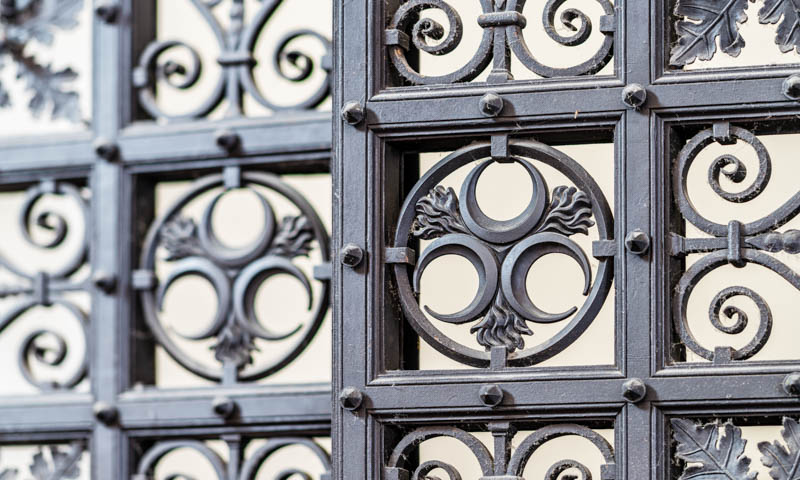
Lo stemma Strozzi, d’oro alla fascia di rosso caricata di tre mezze lune crescenti d’argento, richiama le origini antiche della casata, forse longobarde o romane, e il legame con Fiesole, la cui impresa civica presenta il crescente lunare. Trasferiti a Firenze nel XIII secolo, gli Strozzi divennero uno dei lignaggi più numerosi e influenti della città, protagonisti della vita politica, sociale ed economica per secoli.
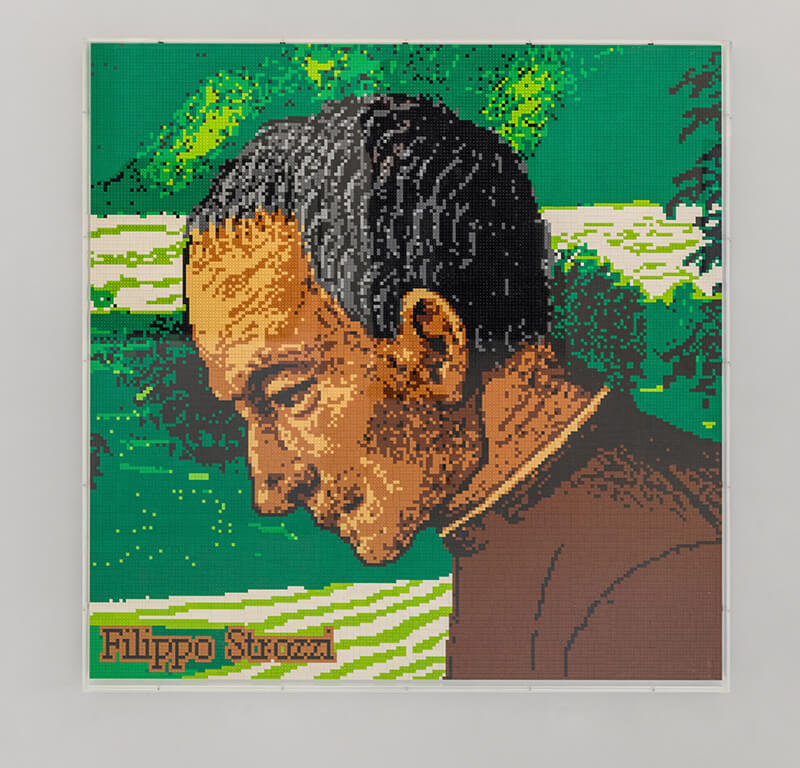
Filippo Strozzi il Vecchio (1428-1491), dopo venticinque anni di esilio imposto dai Medici, tornò a Firenze nel 1466 con l’obiettivo di ristabilire il prestigio familiare, costruendo una solida rete di relazioni con le principali corti europee. Dedicò gli ultimi anni alla costruzione del proprio palazzo, concepito come simbolo di rinascita e longevità della casata e accompagnato da imprese artistiche come la cappella in Santa Maria Novella e il monumento funebre scolpito da Benedetto da Maiano.
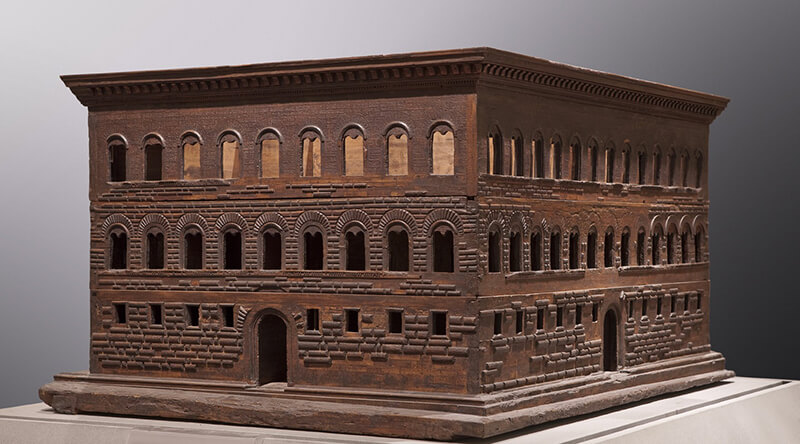
Work on Palazzo Strozzi began at dawn on 6 August 1489, under the sign of Leo, after a lengthy process of acquiring plots of land “in the most convenient and beautiful site in the city”, at the crossroads of what are now Via Tornabuoni and Via Strozzi. The building site, documented in the so‑called Libri della muraglia, brought together leading architects such as Giuliano da Sangallo and Simone del Pollaiolo known as Il Cronaca, who shaped an exemplary project for a Renaissance aristocratic residence.
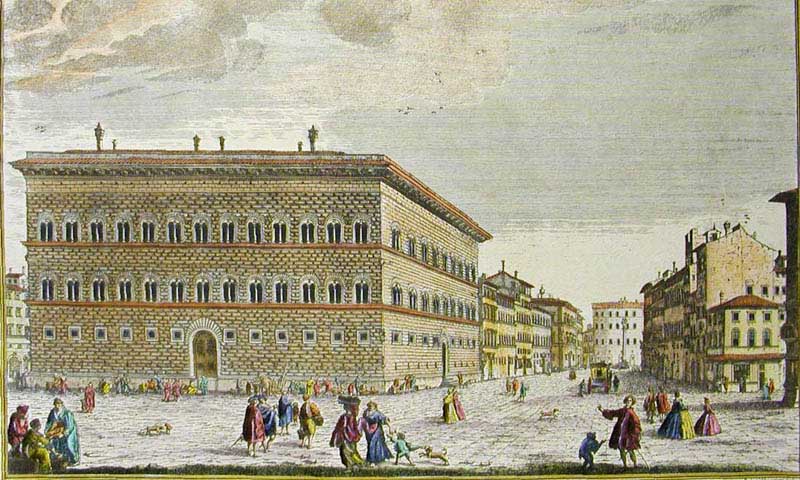
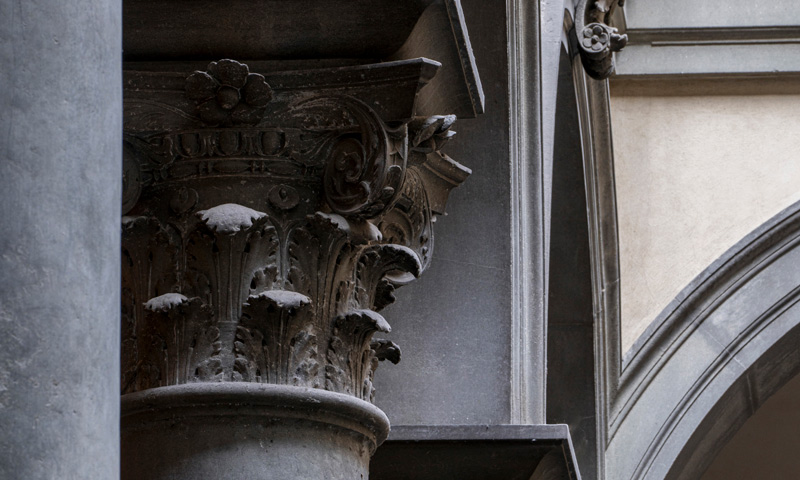
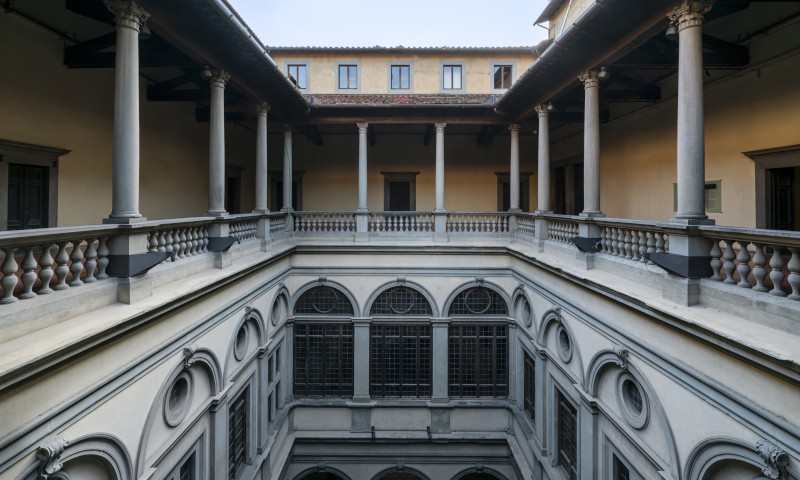
The palazzo is characterised by its regular, symmetrical ground plan, its graduated rustication, the large mullioned windows and the colonnaded courtyard, which reinterprets and innovates earlier models, in particular that of the Palazzo Medici. Despite Filippo the Elder’s wishes as set out in his will, at the time of his death the south façade and half of the crowning cornice were still unfinished, reflecting the political difficulties encountered by the family in the Medicean age.
In 1538 the palazzo passed to the Medici‑aligned branches of the Strozzi family, who continued to distinguish themselves between Florence, Rome and France through titles, wealth and patronage. From the eighteenth century to the early twentieth century, despite growing financial difficulties, the Strozzi maintained their bond with the building through restoration campaigns and cultural initiatives.
In 1937 the palazzo was purchased by the Istituto Nazionale delle Assicurazioni (INA), which launched extensive restoration work culminating in 1940 with the Exhibition of the Tuscan Cinquecento, marking Palazzo Strozzi’s transformation into Florence’s foremost exhibition venue. Alongside the long‑established presence of the Gabinetto G. P. Vieusseux and the Istituto di Studi sul Rinascimento (since 1940), it has housed the Fondazione Palazzo Strozzi since 2006 and, since 2014, the Florence seat of the Scuola Normale Superiore di Pisa.
Thanks to a cultural federalism process, since 2024 the palazzo has been owned by the City of Florence, placing the Fondazione Palazzo Strozzi at the heart of a broader project to enhance the building and to promote exhibition and cultural activities.
Today Palazzo Strozzi stands out as one of the most iconic symbols of Renaissance Florence, a witness to history, culture and innovation that continues to play a central role in the city’s cultural life.